AI 1-st SaaS for Unit Test generation
AI-powered solution for GENERATING QUALITY TEST COVERAGE via CI/CD integration
🗂️ Overview
Early AI is an AI-powered platform for generating and refining automated tests. I worked across both the IDE extension and the Web Platform, designing the AI chat workflow inside the code editor, shaping the core UX of the platform. The work was validated through successful enterprise pilots, including McAfee
Goal
The company started as B2D (business-for-developers), but feedback signaled the market needed more. Our objective: discover product-market fit in the enterprise segment.
My Role
• Product Designer (end-to-end) →
- • UX Research
- • UX/UI Design
- • Design System
- • Prototype
- • Handoff
- • Webflow Dev
- • Marketing assets
Timeframe
2024 - now
Team
COO · Founder ·
CTO · Engineers (3)
CTO · Engineers (3)
Key Outcomes
- • Redesigned IDE extension → addressed pilots' #1 blocker: trust in AI output
- • Designed web platform (roles, billing, analytics, governance) for enterprise evaluation
- • UX validated across 10+ pilots → shaped next iteration
- Governance and coverage analytics I designed gave enterprise buyers like McAfee the transparency to adopt
💥 Problem Statement
Market-Level Problems:
- • AI increases code volume dramatically
- • Many tools can generate code, but none validate it
- • Enterprises face regression and instability
- • Lack of trust in AI-generated code
- • Fragmented workflows → poor adoption
UX Challenges:
- • No existing UX foundation, only a raw VSCode extension
- • No visibility into the AI’s decisions
- • No error communication
- • No enterprise-level governance
- • Highly technical audience, unclear expectations
- • Zero existing research artifacts
- • Need to design Web Platform from scratch
We needed to improve the UX, but before committing to any specific direction, we first had to ensure we were solving the right business and customer problems.
from pain → to plan
💻 Process
Discovery
Our goal was to understand developer workflows, expectations, and pain points before defining any product direction. So I split the research process into four key areas.
User Interviews
CTO, engineers, pilot clients
- • Expectations
- • Real blockers
Workflow Analysis

GitHub, PR flows, CI/CD
- • How developers work today
- • Where automation should fit
Competitor Teardowns

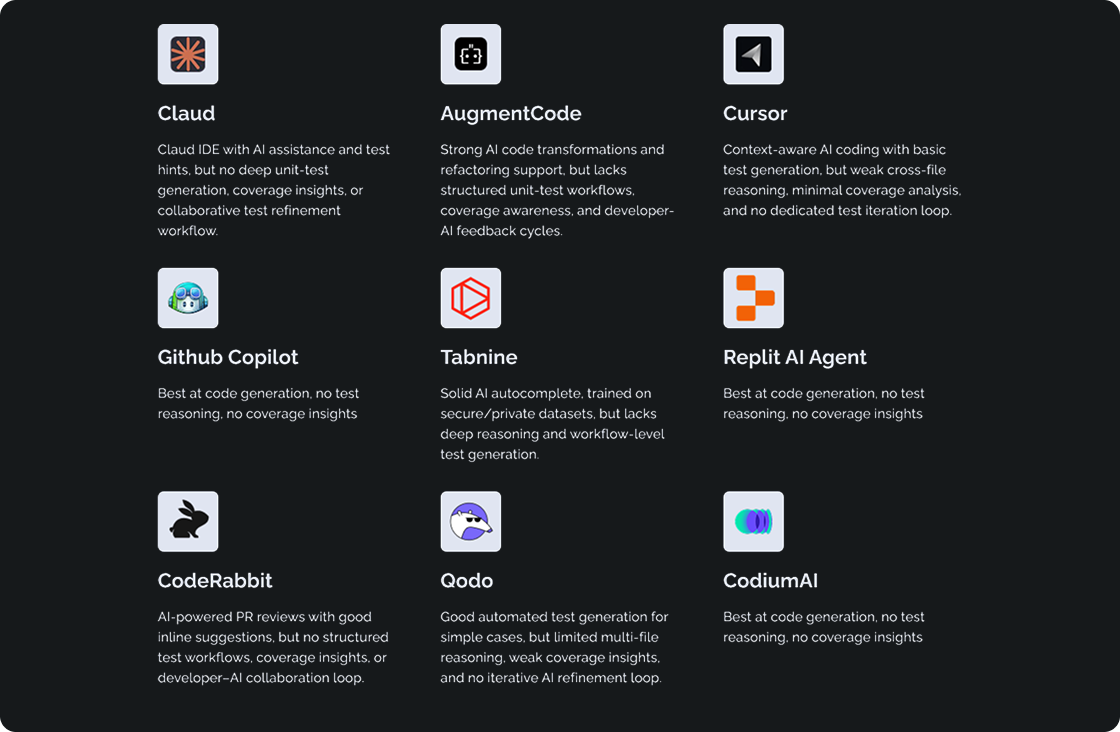
Cursor, Claude, Diffblue, Copilot
- • What patterns work
- • Gaps in current solutions
Errors & Failures Review
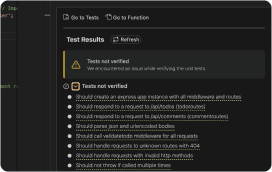
- • Where confusion happens
- • Why developers lose trust
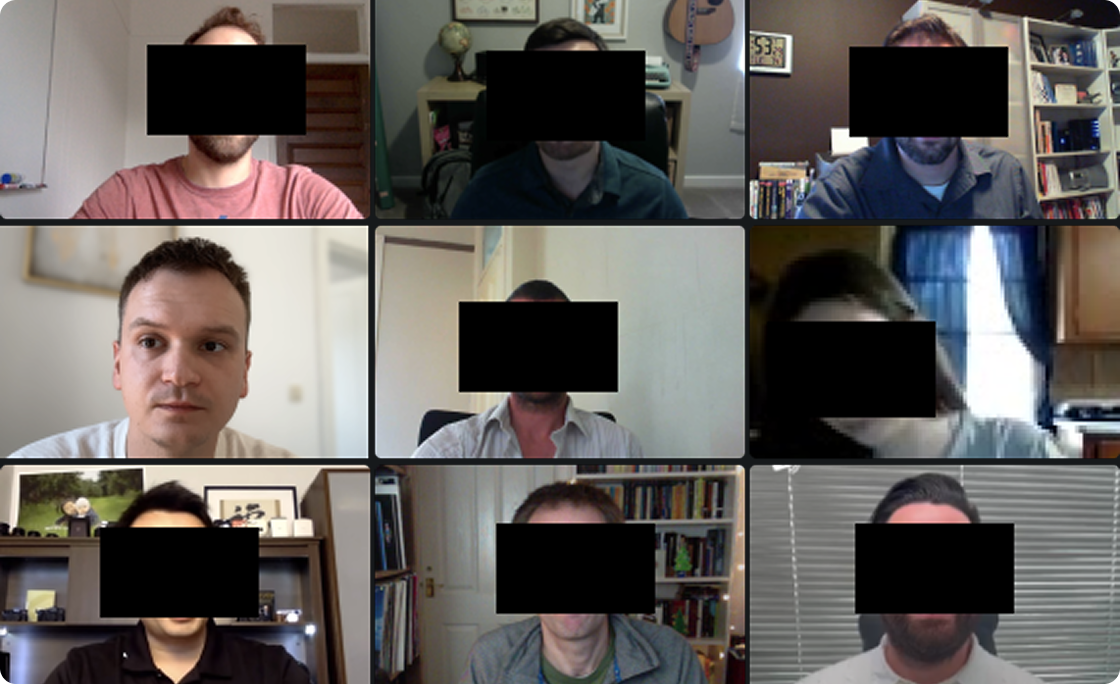
User interviews with pilot’s customers
Before designing, building, we challenged our assumptions with pilot clients and gathered their feedback about what developers and managers in corporates really need
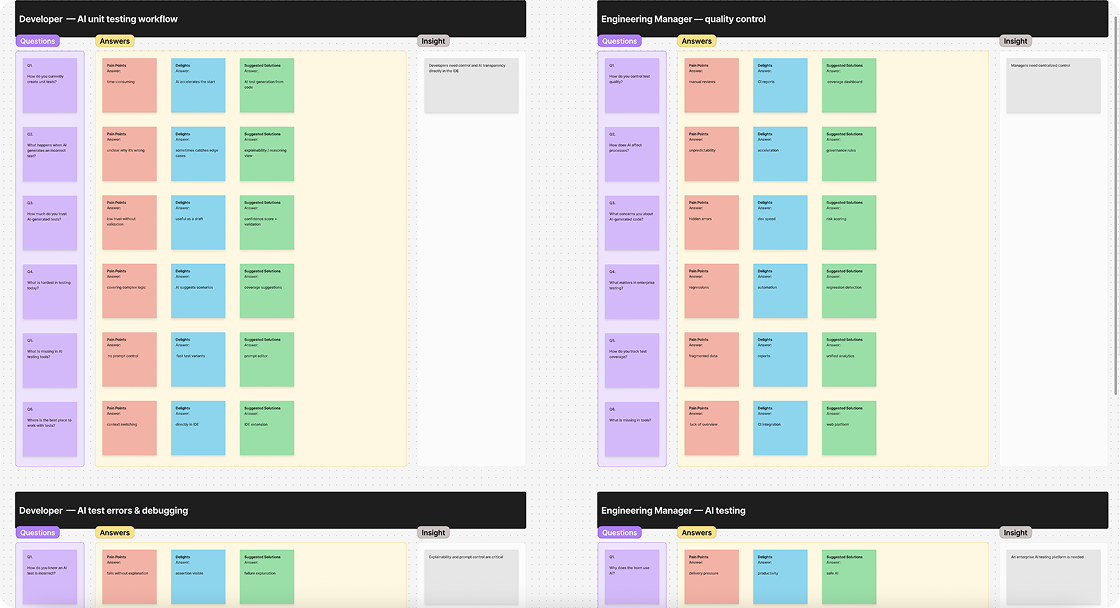
I mapped client call insights into an affinity diagram, grouping questions and key takeaways to identify recurring themes.
I built separate customer journey maps for developers and development managers to visualize their workflows, pain points, and decision points.
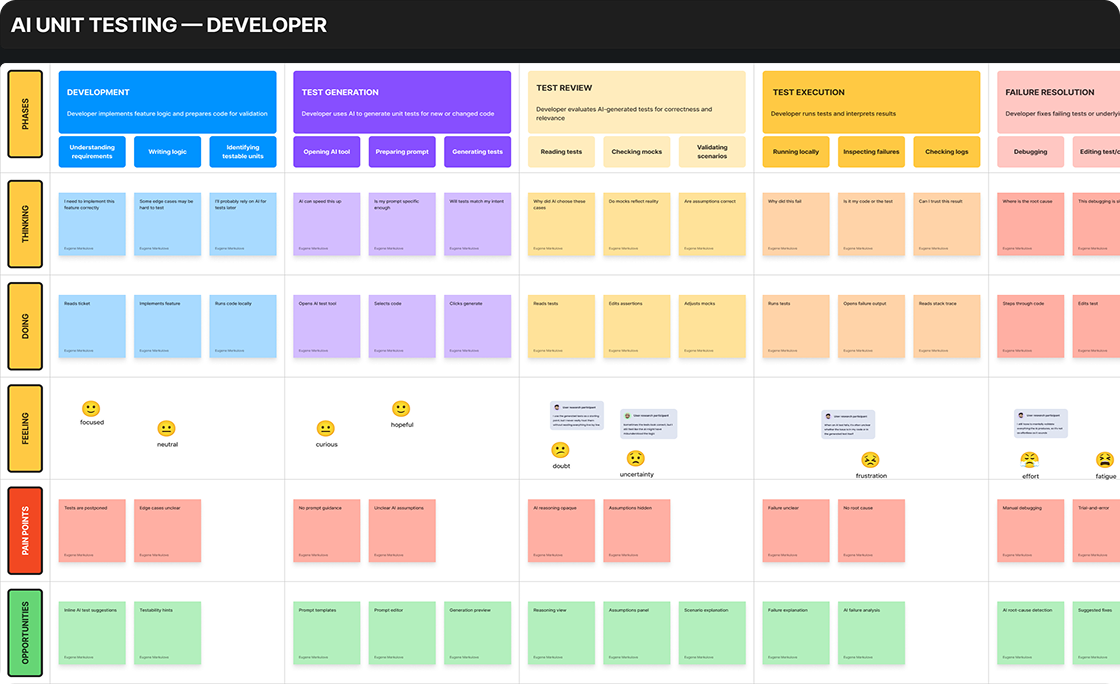
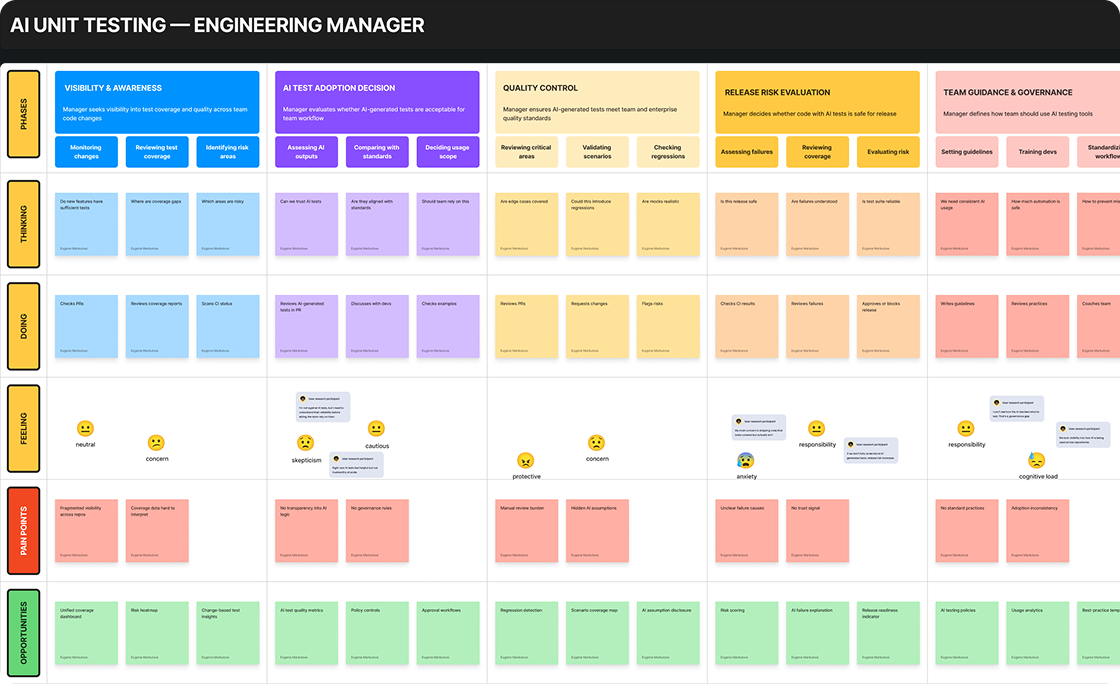
User interviews Summary
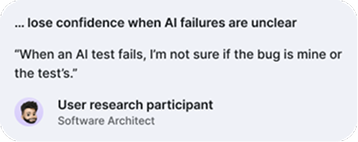
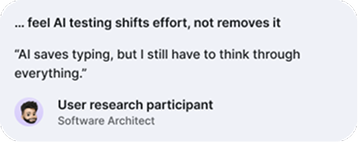
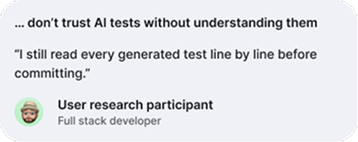
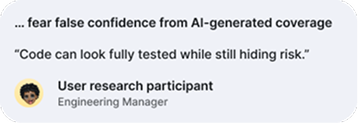
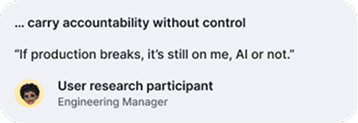
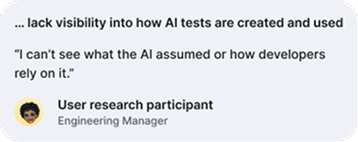
I learned how teams struggle to trust AI-generated tests. Then we came back to design with great feedback and clear directions.
Developers insights
Managers insights
Competitor Analysis
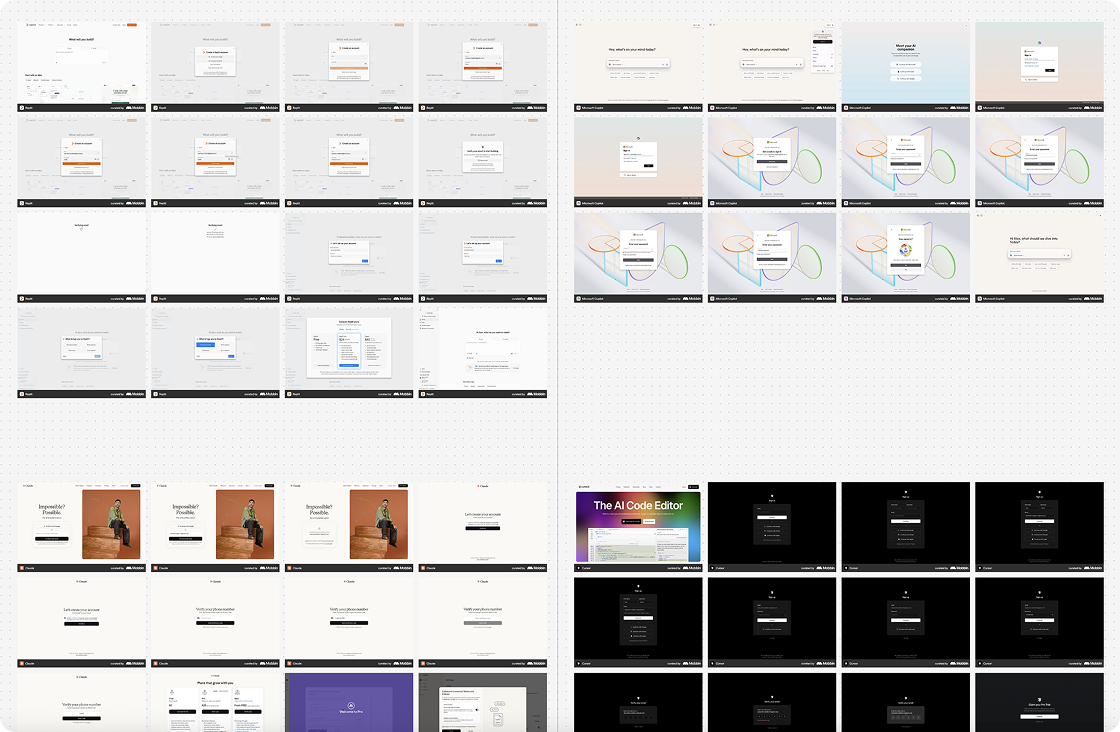
Before starting the design, I conducted a competitive analysis of UX patterns used in leading devtools and B2B platforms.
I studied how competitors structure their interfaces and websites, identifying solutions that would resonate with our new B2B audience.
This research helped me define the best practices and gaps to address in our own product experience.
I studied how competitors structure their interfaces and websites, identifying solutions that would resonate with our new B2B audience.
This research helped me define the best practices and gaps to address in our own product experience.
I explored various UI and UX patterns
from plan → to solution
🚀 Solution
For now, I need to explain the solution I established with Early's team. I asked myself and the team a simple question: do we stay a developer tool inside the IDE, or do we build a web platform for team visibility and governance? The team decided to pursue both: an in‑IDE developer tool and a web platform for team visibility and governance.
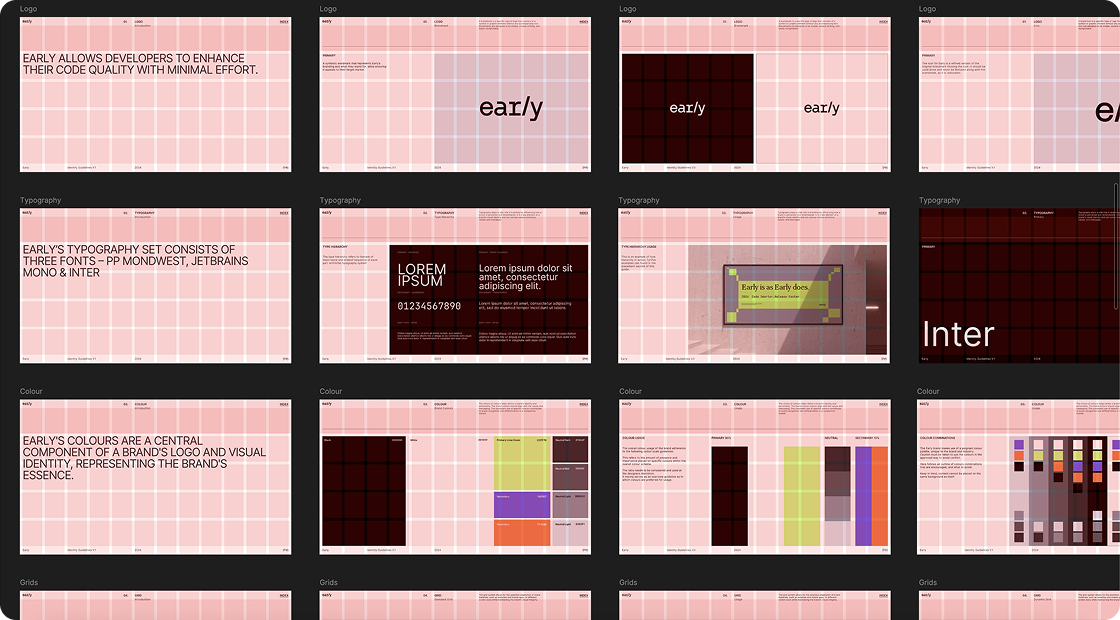
Brand extension: I was brought in to adapt the existing brand for a strategic pivot from B2D to B2B. The original brand kit was too minimalistic and used a typeface that didn’t resonate with enterprise clients. I quickly replaced the font for better readability, expanded the visual system with new patterns and graphics, and unified the design across the website, marketing materials, and product interfaces, all as the solo designer.
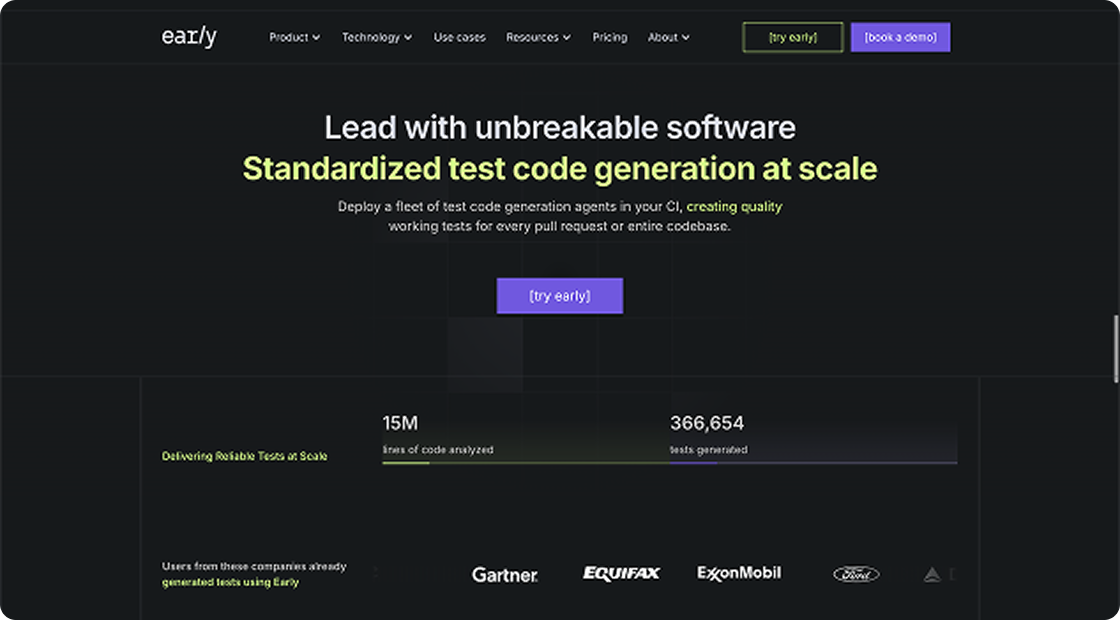
Launched redesigned marketing Webflow website: I launched a new marketing website to reposition the brand from B2D to B2B. As the product designer, I led the Webflow design and launch, expanding the visual system and adapting messaging to resonate with enterprise clients. The site has since evolved through multiple iterations as we continued to refine our product‑market fit.
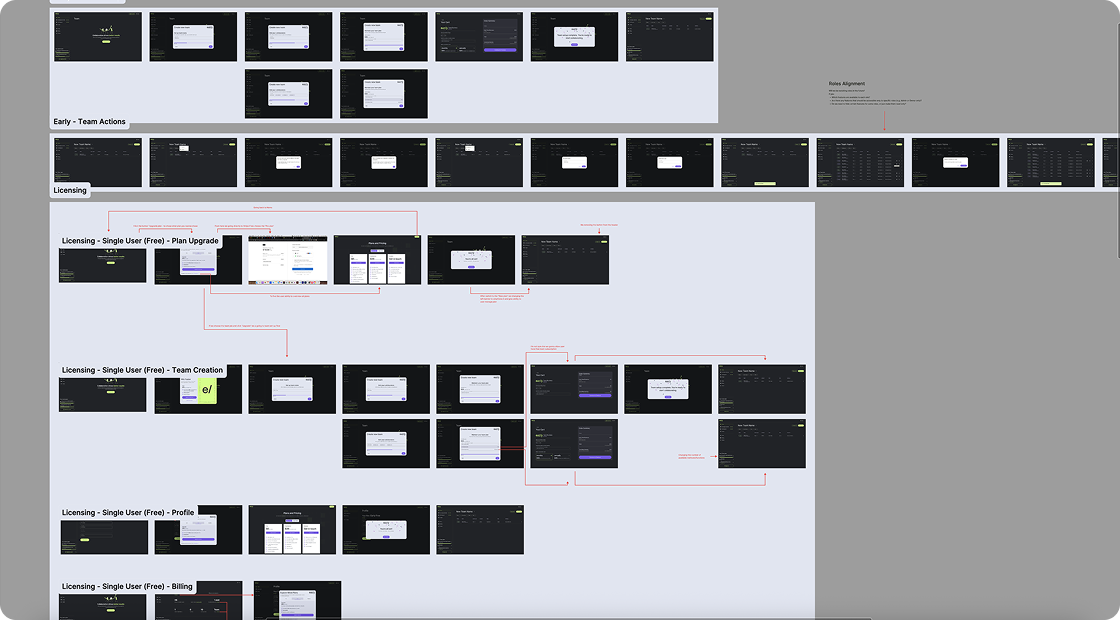
MVP UX/UI design: I arrived at a fast, flat MVP web interface designed for rapid validation and developer efficiency.
Extension redesign: I redesigned the IDE extension UX to make AI‑generated tests clearer, more controllable, and easier to refine. The goal was to give engineers transparency and a fast feedback loop inside their workflow.

🚧 MVP Web Platform
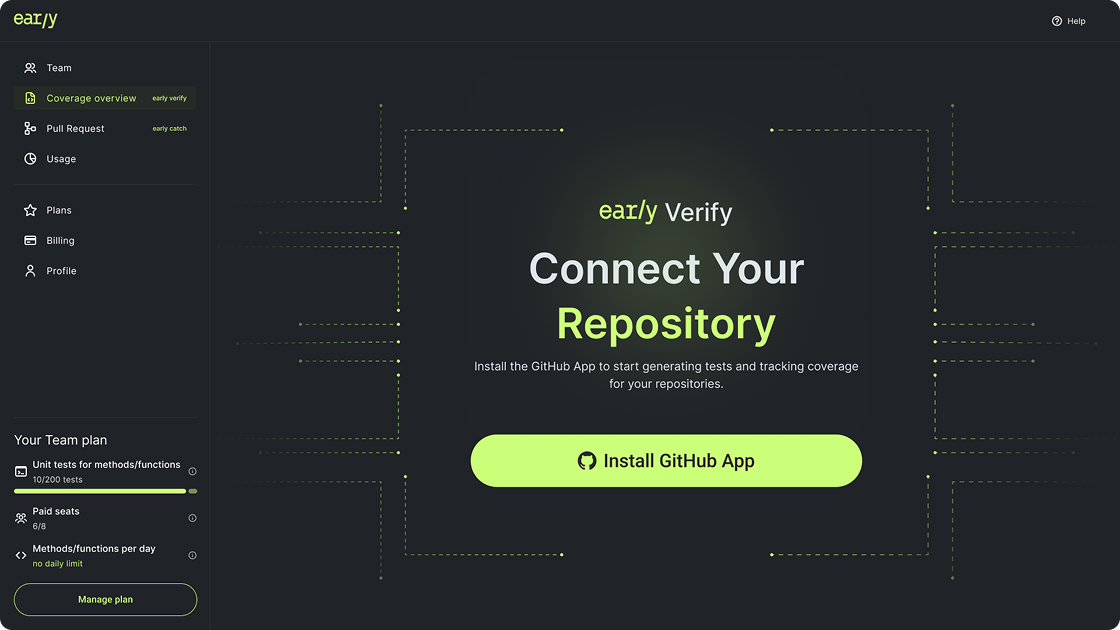
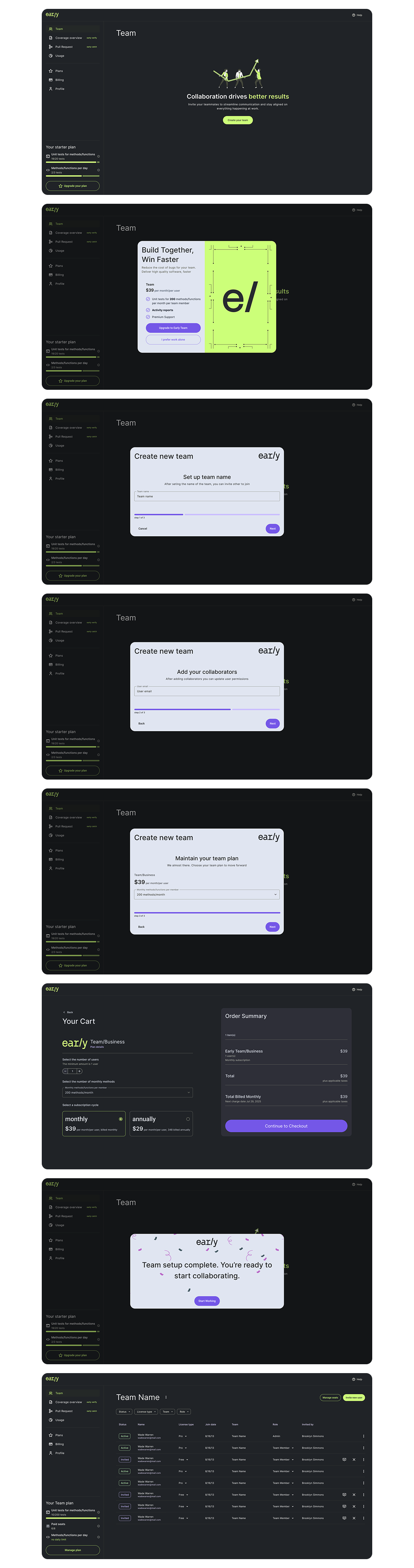
I partnered with the CEO and CTO to design the MVP web platform from scratch, covering team setup, roles and permissions, billing, analytics, and both single and multi‑user experiences. This product helped the company secure additional funding and onboard its first enterprise clients, including McAfee.
Onboarding
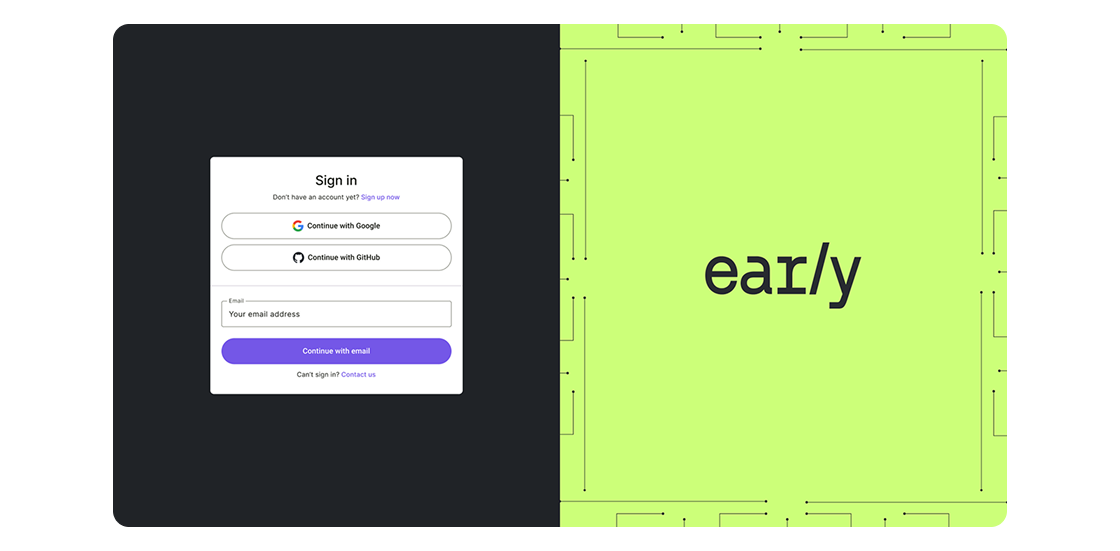
Limited to a sign‑in screen, keeping the initial entry simple and fast for early adopters.
Team Creation
A multi‑step flow: a payment request pop‑up, a three‑step team setup wizard, plan payment, and a success message.
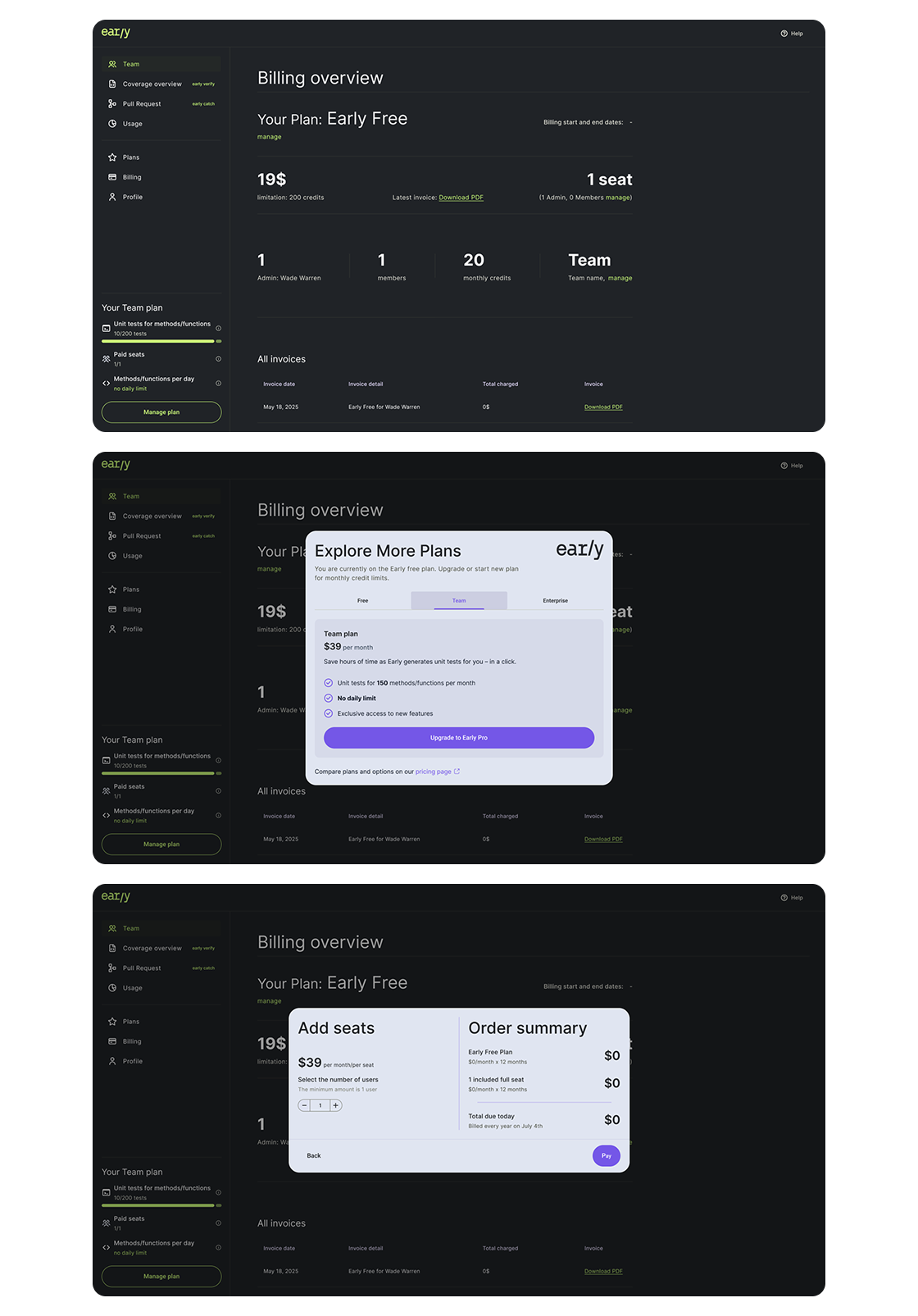
Billing
A dashboard showing the current billing month, team seat management, credit usage, invoice downloads, and subscription options.
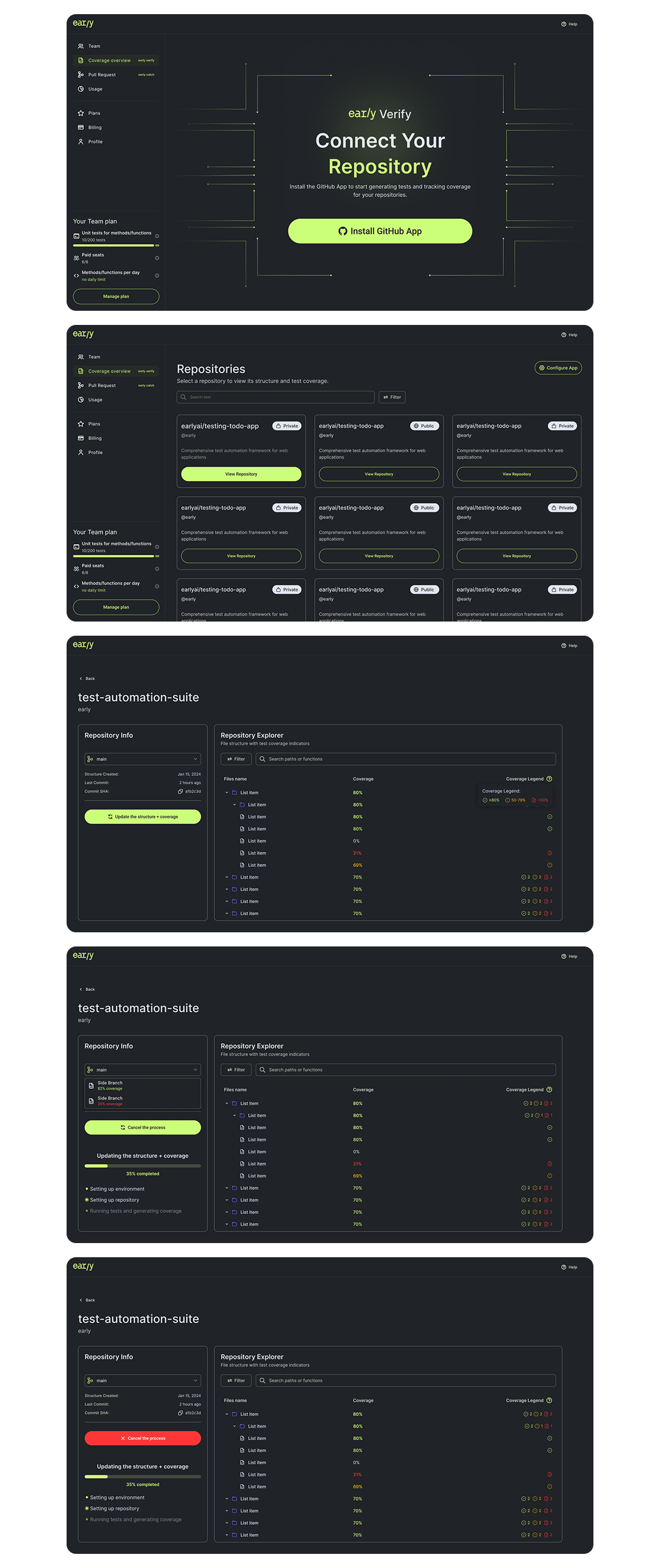
Analytics
GitHub integration to monitor repository coverage and trigger test runs, giving teams visibility into code quality.
🚧 IDE EXTENSION REDESIGN
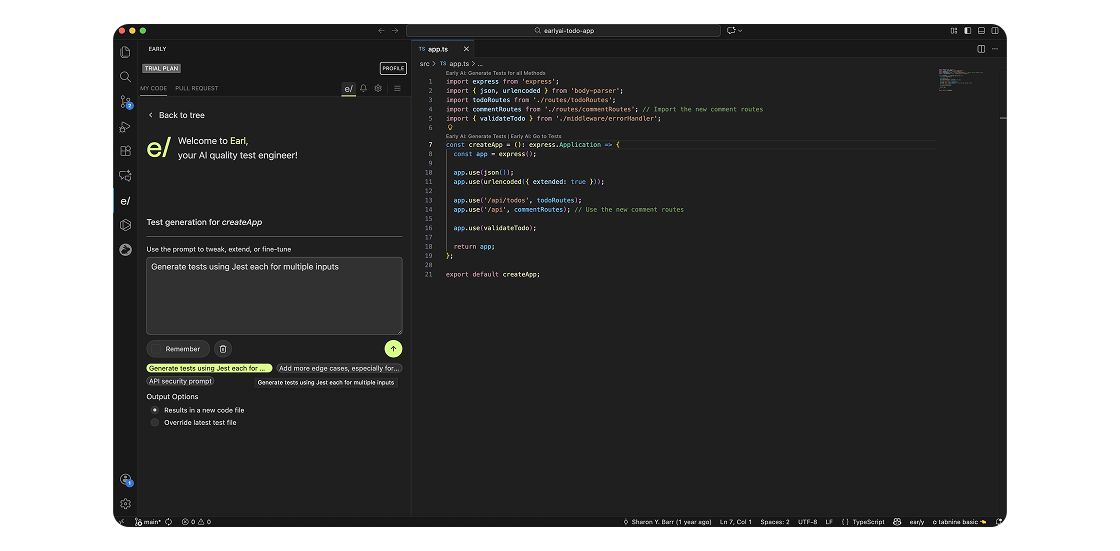
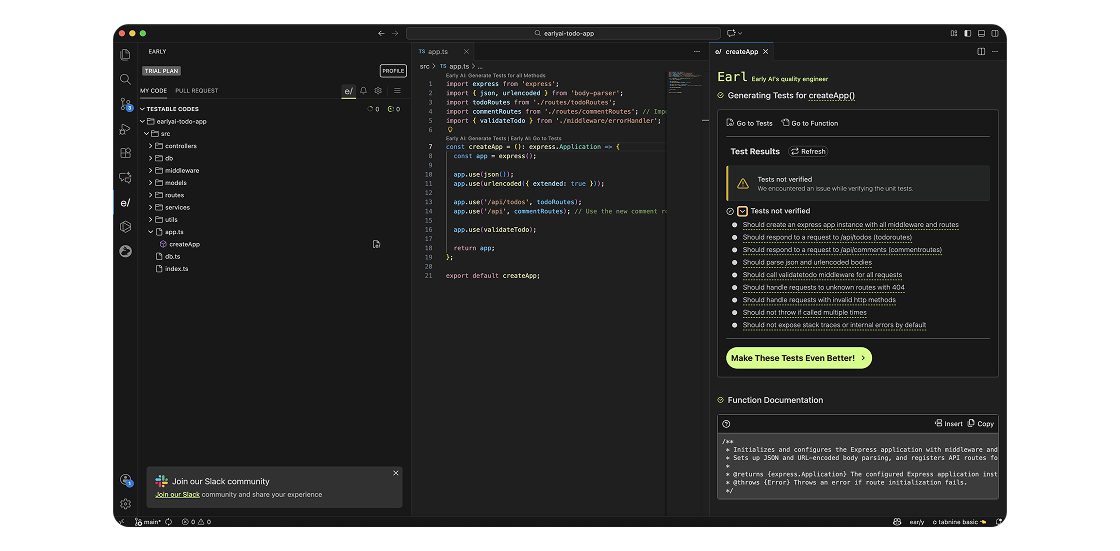
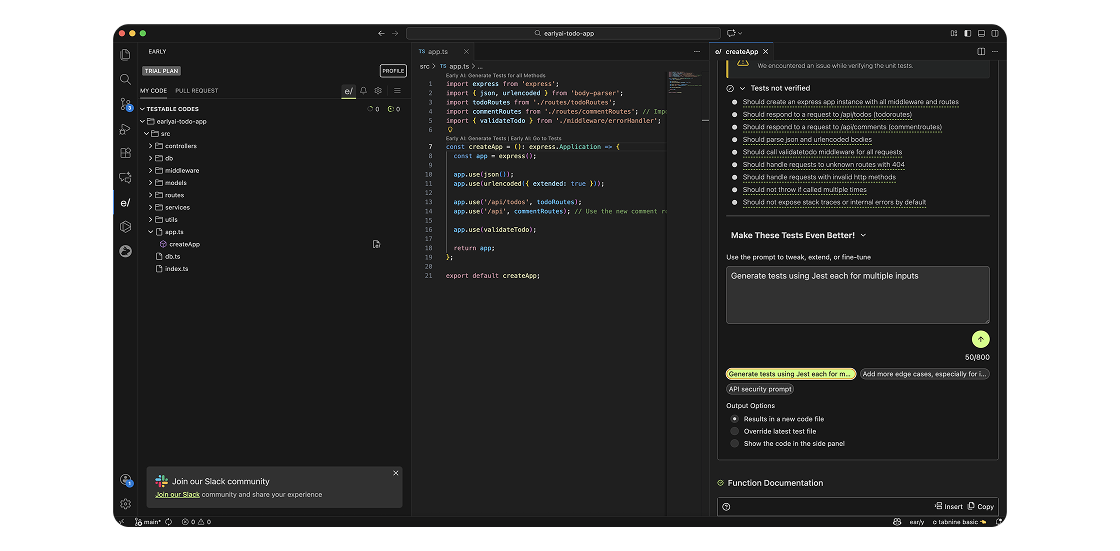
I redesigned the IDE extension to give developers more control and transparency over AI-generated tests.
Pre‑generation chat
Added custom prompts, smart defaults, and output options to guide the AI before test creation.
Clear error indicators
Added explanations for failures so developers understand what went wrong and why.
Post‑generation chat
Developers can refine tests, get improvement suggestions, and immediately regenerate results.
📋 Summary
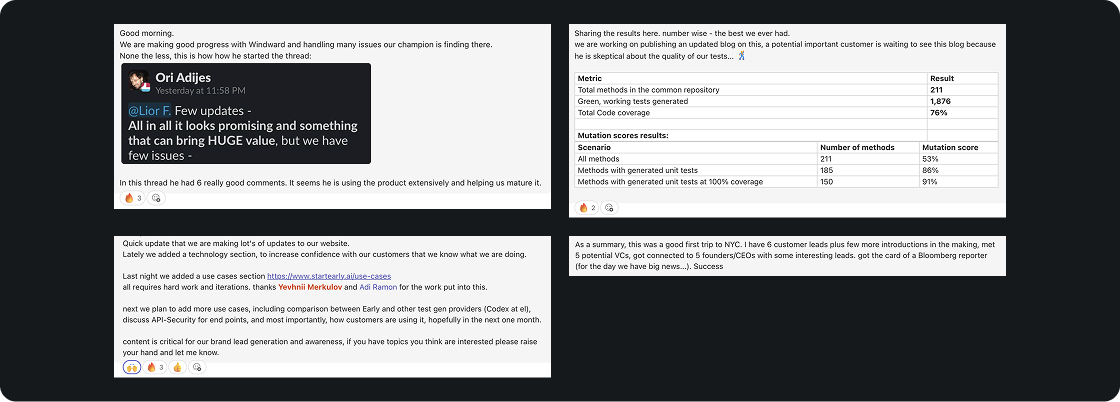
1. Post‑launch feedback from pilots and prospects confirmed clear demand and relevance of the solution.

2. At the same time, users revealed key weaknesses around AI trust, visibility, and practical usability.
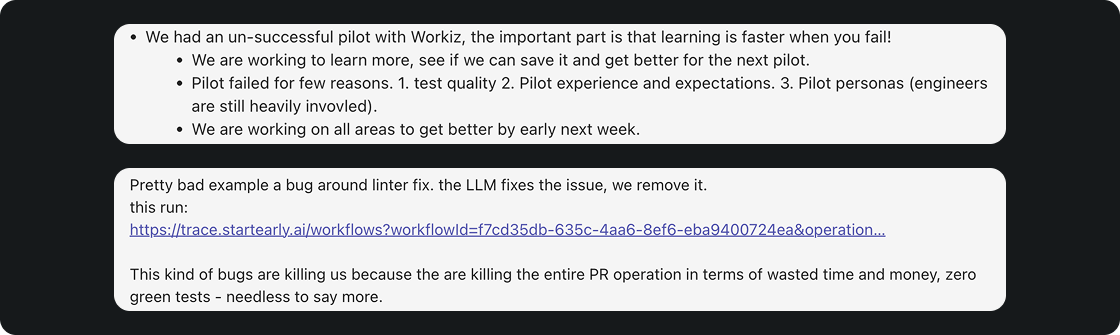
3. These insights directly guided the next product iteration and strategic direction.
4. The release of Claude Code introduced native unit test generation directly into developers' workflows, challenging our core differentiation and prompting a strategic reassessment of Early AI's direction.
Final note:
In response, we initiated a new discovery cycle to identify unmet needs beyond test generation and redefine the product's value in an AI‑native development landscape.
📊 Outcome
- • Conducted 10+ enterprise pilot programs
- • Signed enterprise deal with McAfee
Let’s build the future together
From MVPs to growth stage — I help teams transform ideas into experiences

 Schedule a Call
other projects